
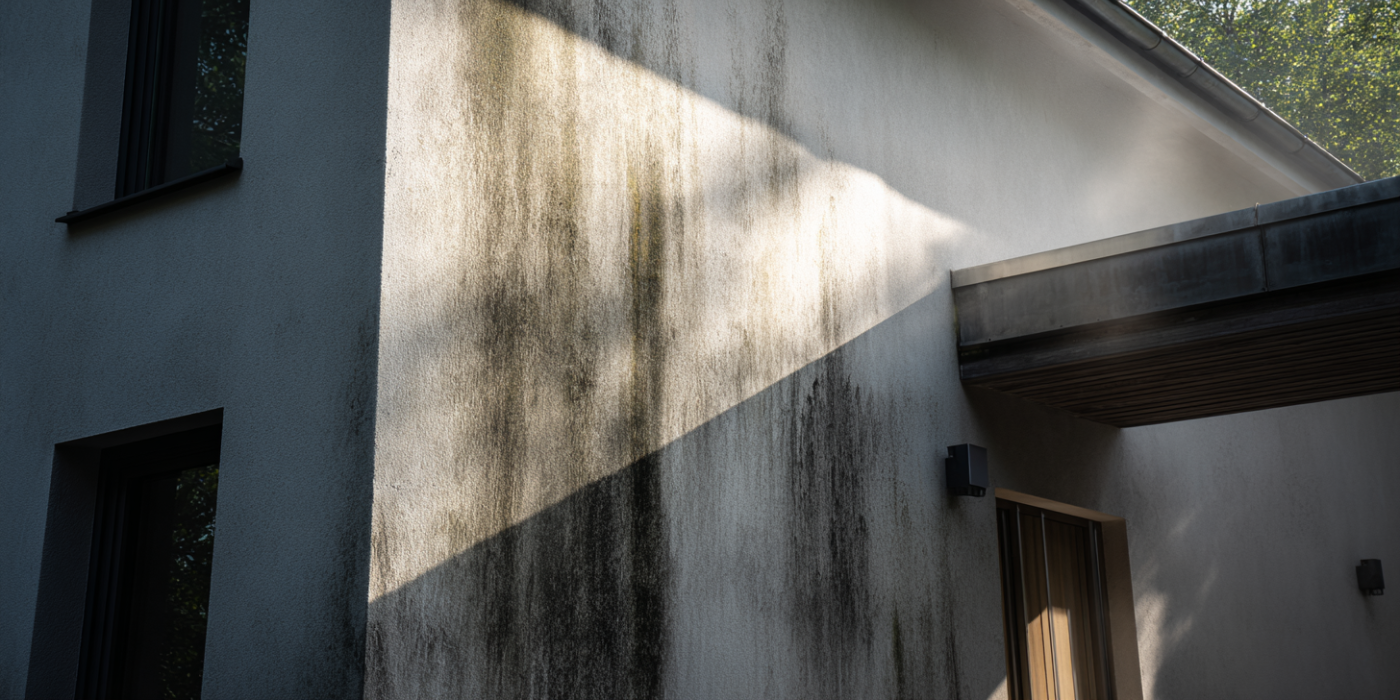
Why does render turn black? This is a question many homeowners ask when the exterior walls of their property begin to show dark patches or black staining. Render can look bright and clean when first applied, yet over time, it can gradually become discoloured by environmental factors.
Black staining on render is usually caused by biological growth, pollution, or moisture-related contamination. Although these stains may appear difficult to remove, they can often be cleaned safely using the correct methods.
In this article, we explain what causes render to turn black, how these stains develop, and the safest ways to restore the original appearance of rendered walls.
If you want to understand the full render cleaning process, our complete render cleaning guide for homes and commercial buildings explains the safest cleaning techniques used by professionals.
Common Causes of Black Stains on Render
Black staining on render can develop for several different reasons. In most cases, the discolouration appears gradually as contamination builds up on the surface.
Understanding the cause of the staining helps determine the best cleaning method.
Black Mould Growth
One of the most common causes of black staining is mould or fungal growth.
When moisture remains on the surface of render for extended periods, mould spores can begin to grow. Over time, this growth appears as dark patches or small black spots across the wall.
These stains often appear on shaded elevations where sunlight is limited.
Pollution and Environmental Dirt
In urban areas, airborne pollution can settle on exterior walls and gradually darken the surface.
Traffic emissions, industrial pollution, and airborne dust particles can combine with moisture to create dark staining on render.
This type of contamination is particularly common on properties located near busy roads.
Water Runoff from Rooflines
Rainwater running down exterior walls can also create black streaks.
When water flows from gutters, rooflines, or window sills, it can carry dirt and organic material onto the render surface. Over time, this runoff may leave visible dark marks.
These stains are often seen beneath guttering, roof edges, or architectural features where water regularly flows down the wall.
Why Black Render Stains Often Appear on Certain Walls
Black staining does not always appear evenly across the entire building. Some walls are more likely to develop dark discolouration than others.
North-Facing Walls
Walls that face north usually receive less direct sunlight. Because of this, they remain damp for longer after rainfall.
Persistent moisture encourages mould and algae growth, which can lead to dark staining.
Areas with Limited Airflow
Sections of the property that have restricted airflow may also develop staining more quickly.
For example, walls located between buildings or behind dense vegetation often remain damp for longer periods.
Walls Near Trees and Vegetation
Trees and plants can increase the amount of organic debris in the surrounding environment.
Leaves, pollen, and airborne particles can settle on the render surface and encourage biological growth.
How Black Stains on Render Can Be Cleaned
Although black staining may look permanent, it can often be removed safely using the correct cleaning methods.
Professional render cleaning focuses on removing contamination without damaging the surface.
Soft Washing
Soft washing is one of the most effective ways to remove black stains from render.
This process involves applying specialist cleaning solutions that break down mould and organic growth. Once the treatment has worked, the surface is gently rinsed using low-pressure water.
Because the treatment targets the biological growth itself, soft washing usually produces longer-lasting results.
Biocide Treatment
After the render has been cleaned, a biocide treatment may be applied to the surface.
This treatment helps eliminate remaining spores that could cause mould to return quickly.
Biocide treatments are commonly used by professional render cleaning companies to extend the lifespan of the cleaning results.
Why Pressure Washing Is Not Recommended for Render
Many homeowners consider using a pressure washer to remove dark stains from render. However, this approach can often cause damage.
High-pressure water jets can erode the outer surface of the render and leave visible streaks across the wall.
Pressure washing can also force water deep into small cracks or joints. Over time, trapped moisture may lead to further staining or structural issues.
Because of these risks, most professional render cleaning specialists use low-pressure cleaning techniques instead.
Early Signs of Black Staining on Render
Recognising the early signs of contamination can help prevent heavy staining from developing.
Homeowners should look for:
- Small black spots are appearing on the render surface
- Dark patches forming on shaded walls
- Vertical streaks developing beneath gutters or rooflines
- Uneven discolouration across sections of the wall
Addressing these signs early often makes the cleaning process easier and more effective.
How to Prevent Black Stains Returning
Although it is difficult to prevent staining entirely, several maintenance steps can help reduce the likelihood of black stains returning.
Keeping trees and hedges trimmed allows more sunlight and airflow to reach exterior walls. This helps surfaces dry faster after rainfall.
Maintaining gutters and downpipes is also important. Overflowing gutters often cause water to run down the walls and create staining.
Occasionally rinsing lower wall sections with a gentle hose can also remove light dirt before contamination becomes more visible.
These simple steps can help extend the time between professional render cleaning services.
Why Professional Render Cleaning Is Usually the Best Option
Professional render cleaning companies have the knowledge and equipment required to remove staining safely.
Before starting work, contractors typically inspect the property to identify the type of render and the cause of the staining.
This allows them to choose the most appropriate cleaning method for the surface.
Using specialist treatments and controlled low-pressure equipment ensures contamination can be removed without damaging the render.
Because the cleaning treatments target the underlying biological growth, professional cleaning usually produces longer-lasting results.
What Should Homeowners Do Next?
If your exterior walls have started to develop dark patches or black staining, addressing the problem early can help restore the appearance of your property.
Understanding why render turns black allows homeowners to identify the cause of staining and choose the safest cleaning method.
Professional render cleaning can often remove black stains effectively while protecting the surface of the render.
If you want to learn more about the safest cleaning methods and how render cleaning works, read our complete render cleaning guide for homes and commercial buildings.
With the correct cleaning approach and regular maintenance, rendered walls can remain bright, clean, and well-maintained for many years.


