
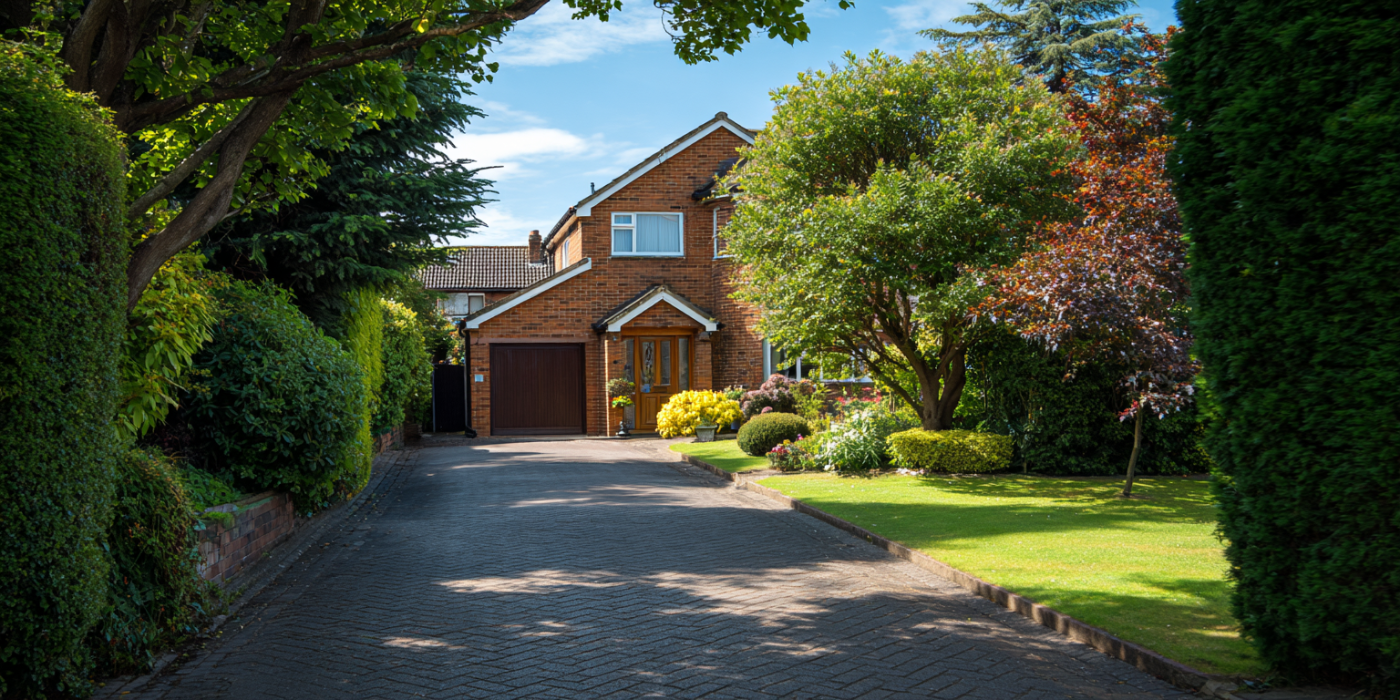
Can a Dirty Driveway Be Fully Restored? Driveway restoration is one of the most common enquiries we receive at One Call Cleaning Ltd in Swindon. Many homeowners assume their driveway is permanently damaged once oil stains, rust marks or tyre scuffs appear. In reality, most driveways can be significantly improved, and often fully restored, with the correct cleaning methods, surface knowledge and professional equipment.
The key question is not whether a dirty driveway can be cleaned, but whether it can be restored without damaging the surface beneath. That depends on material type, stain age, porosity and how previous cleaning attempts were handled.
This in-depth guide explains what causes common driveway stains, what can realistically be removed, and how professional driveway cleaning in Swindon restores kerb appeal safely and effectively.
Why Driveways Become Stained in the First Place
A driveway is exposed to more abuse than almost any other surface around your home. It carries vehicle weight daily, absorbs fluids, traps organic growth and is exposed to Wiltshire’s damp seasonal conditions.
Over time, staining occurs due to:
- Oil and diesel leaks
- Brake dust and tyre rubber transfer
- Rust from garden furniture or parked vehicles
- Moss and algae growth in shaded areas
- Leaf tannins from nearby trees
- General atmospheric pollution
Block paving, concrete and tarmac are all porous to varying degrees. Once contaminants penetrate below the surface, simple washing is no longer enough. That’s where proper restoration methods matter.
Oil Stains: Are They Permanent?
Oil stains are the most common driveway complaint. They typically appear beneath parked vehicles and gradually darken over time.
Oil penetrates deeply into porous materials such as block paving and concrete. If left untreated for months or years, it can bond to the substrate. However, that does not mean it is permanent.
Professional removal usually involves:
- Targeted degreasing agents are designed to break down hydrocarbons
- Dwell time to allow chemical penetration
- Controlled pressure washing to extract the emulsified residue
The age of the stain plays a major role. Fresh oil stains are far easier to treat than those that have been repeatedly driven over and compacted.
In Swindon, where rainfall can help spread contamination across the surface, prompt treatment significantly improves success rates.
Older stains may not disappear completely, but can often be lightened dramatically, restoring a far more uniform appearance.
Tyre Marks and Black Scuffs
Tyre marks are usually caused by:
- Stationary steering on block paving
- Hard braking
- Reversing with sharp turning angles
- Warm rubber bonding to hot surfaces
Unlike oil, tyre marks sit closer to the surface. However, they can embed into textured block paving and concrete.
Professional driveway cleaning uses controlled pressure combined with appropriate detergents to lift rubber deposits without damaging jointing sand or surface integrity.
Aggressive DIY pressure washing often causes “striping” — uneven clean lines where the lance has etched into the surface. This can make the driveway look worse than before.
Correct technique is as important as pressure level.
Rust Spots: The Orange Stains That Spread
Staining often appears under:
- Garden furniture
- Metal planters
- Skips or building materials
- Vehicles parked long-term
Rust reacts chemically with the driveway surface. On lighter block paving or concrete, it creates bright orange staining that can appear alarming.
Rust removal requires specialised acidic treatments applied carefully to avoid bleaching or surface etching. It is not something that should be treated with household chemicals.
When done correctly, rust spots can often be almost completely removed.
The Role of Surface Type in Restoration Success
Not all driveways respond the same way to cleaning.
Block Paving
Block paving is highly restorable. Individual bricks can sometimes be replaced if heavily stained. After cleaning, re-sanding restores structural integrity and improves appearance.
Concrete
Concrete responds well to professional cleaning but may retain faint “ghosting” if oil has penetrated deeply. Sealing after cleaning can prevent recurrence.
Tarmac
Tarmac is more delicate. High pressure can cause pitting and aggregate loss. Cleaning must be lower pressure and carefully controlled.
Resin-Bound
Resin-bound surfaces require specialist knowledge. Incorrect cleaning can damage the resin matrix.
Understanding material composition is essential before attempting restoration.
What Professional Driveway Restoration Actually Involves
Many homeowners assume driveway cleaning is simply high-pressure water. In reality, effective restoration is a staged process.
- Surface inspection
- Identification of stain types
- Pre-treatment with appropriate solutions
- Controlled surface cleaning
- Post-treatment if required
- Re-sanding (for block paving)
- Optional sealing
Each step influences the final result.
The difference between a basic wash and a professional restoration lies in stain diagnosis and aftercare.
Can Every Driveway Be Fully Restored?
Honesty is important.
Most driveways in Swindon can be dramatically improved. Many can be restored to near-new appearance. However, there are limitations:
- Deep oil saturation over many years
- Surface degradation from previous incorrect cleaning
- Structural sinking or broken blocks
- Severe tarmac deterioration
Cleaning cannot repair structural damage. It restores surface appearance.
In some cases, partial brick replacement combined with cleaning achieves the best outcome.
Why DIY Often Falls Short
DIY pressure washers typically lack:
- Commercial-grade flow rate
- Surface cleaners for even coverage
- Industrial degreasers
- Knowledge of pressure calibration
Common DIY mistakes include:
- Using too much pressure
- Washing jointing sand out of block paving
- Leaving chemical residues
- Creating visible striping patterns
Correct driveway restoration balances pressure, chemistry and technique.
How Long Do Results Last?
Longevity depends on:
- Traffic levels
- Vehicle condition (oil leaks)
- Tree cover
- Drainage
- Whether sealing is applied
A professionally cleaned driveway in Wiltshire typically remains significantly improved for 12–24 months, sometimes longer, with maintenance care.
Sealing can extend that lifespan and reduce staining penetration.
The Impact on Kerb Appeal and Property Value
Driveways are one of the first features visible from the street. A stained, patchy surface creates the impression of neglect.
Restoration:
- Improves first impressions
- Enhances property photography
- Increases perceived value
- Boosts overall kerb appeal
For homeowners preparing to sell, driveway cleaning is often one of the highest visual-impact, lowest-cost improvements available.
When Should You Book Driveway Cleaning in Swindon?
The ideal time is:
- Spring (after winter moss and grime)
- Early summer (before outdoor entertaining season)
- Before listing your home for sale
- When stains first appear
Delaying allows contaminants to penetrate deeper, reducing the potential for full restoration.
What This Means for Your Driveway
If you’re looking at your driveway and thinking it’s beyond saving, it probably isn’t.
Oil stains that have built up over the years, rust marks from metal furniture, dark tyre scuffs from daily parking, these issues rarely mean replacement is the only option. In most cases, what appears to be permanent damage is simply contamination sitting on the surface.
The important thing is understanding what you’re dealing with. Different stains behave differently, and different surfaces respond differently to treatment. That’s why a proper assessment always comes before any cleaning begins. The goal isn’t just to blast the surface with pressure; it’s to restore it safely and evenly, without causing further damage.
In Swindon and across Wiltshire, driveways are exposed to a lot of weather. Damp conditions encourage algae, vehicles leave residues, and over time, everything starts to look tired. But when the right cleaning methods are used, the transformation can be dramatic. Colour returns. Patchiness fades—the property’s front takes on a different appearance almost immediately.
For many homeowners, driveway restoration is one of the simplest ways to refresh their home’s exterior without major expense or disruption. And in most cases, it’s far more practical than lifting and relaying the entire surface.
If you’re unsure whether your driveway can be restored, a professional inspection will give you a realistic answer. Most surfaces respond far better than people expect — especially when treated before the staining becomes deeply embedded.
A clean driveway doesn’t just improve how your home looks from the street. It changes how you feel about pulling onto it every day.


